Which of the Following Is Not True About Active Transport
The movement of ions or molecules against a concentration gradient with the utilisation of energy is known as active transport. Involves a channel which is specific for a solute ii.
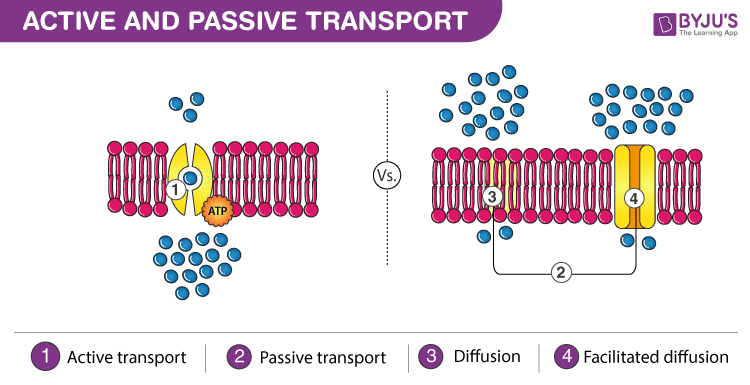
Difference Between Active Transport And Passive Transport
E All of the above are true about secondary active transport.
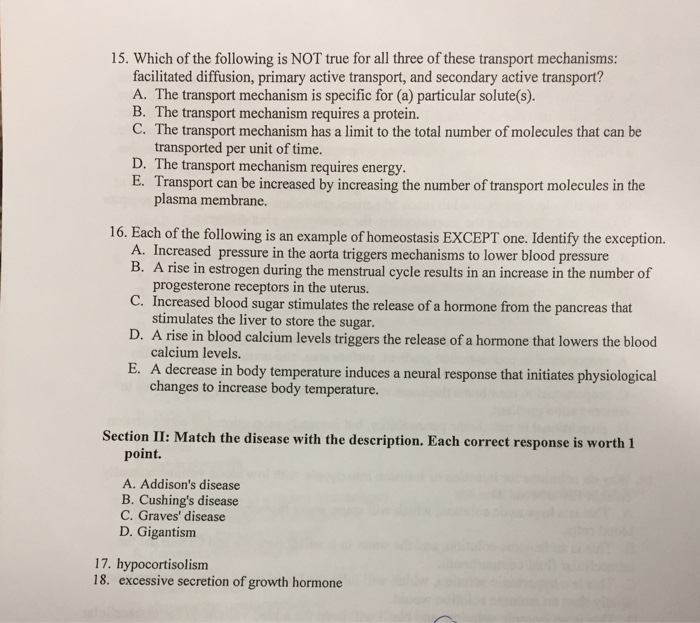
. Which of the following is not true about Active transport Select one requires the help of channel proteins can increase the concentration of an ion in the cell more than the surrounding medium is not driven by the concentration gradient in the cell occurs with the assistance of membrane proteins O is driven by ATP and PMF. Solutes can only move in the direction of their concentration gradient from high to low iv. Involves a channel which is specific for a solute.
B The energy used by the cell is in the form of the ADP molecule C In active transport the cell must push or pump the molecules from areas of high concentration to areas of low concentration. List the three organelles in order involved in the synthesis transport and shipping of proteins. Molecules move down the concentration gradient.
Active transport is facilitated by transporters that require energy to operate. It is the movement of solutes against their electrochemical gradients. Requires additional energy input v.
It requires concentration gradient. It maintains the ionic composition of the intracellular environment. Involves a channel which is specific for a solute.
It results in a higher concentration of molecules on one side of the membrane. D Molecules called pumps function to control. All of the above are incorrect.
Exhibits many properties of enzyme kinectics iii. Which of the following is true of active transport. In a plant cell it takes place in the root cells by absorbing water and minerals.
It does not use any of its own energy. Active transport always leads to accumulation of molecules are ions towards one side of the membrane. Secondary active transport utilizes the enrgy coming from the trasnport of the molecules down the concentration gradient.
Which of the following statements is true regarding active transport. During the process of active transport a protein pump makes use of stored energy in the form of ATP to move molecules. All of the above are true.
Which of the following is NOT true about active transport. Molecules move against their concentration gradient. Molecules actually move down their concentration gradient passive transport just speeds this movement up or allows molecules across the membrane that would otherwise not be able to cross.
Which of the following is NOT true of active transport. CLarge molecules are less likely than small molecules to move by passive transport. Which of the following is NOT true of active transport.
Which of the following is true about Active transport. Which of the following is not true about active transport. - it requires the use of energy.
Solutes can only move in the direction of their concentration gradient from high to low. 2380 72 NEET NEET 2019 Transport in Plants Report Error. So it is not a chemical process.
- it moves molecules against the concentration gradient. Which of the following is not true for active transport. - it allows water soluble molecules and ions to pass through the cell membran.
ATP is not required to move molecules through the membrane. It does not require an input of energy. The main difference between active and passive transport is that active transport requires blank_startATPblank_end and passive transport uses.
Which of the following is NOT true of passive transport. Exhibits many properties of enzyme kinetics. Exhibits many properties of enzyme kinetics.
Biology questions and answers. B The energy used by the cell is in the form of the ADP molecule C In active transport the cell must push or pump the molecules from areas of high concentration to areas. Hence the correct answer is option A.
Active transport requires carrier proteins. So it is not a chemical process. Active transport is a mode of transportation in plants which uses stored energy to move the particles against the concentration gradient.
Active transport requires carrier proteins. B In secondary active transport ATP is hydrolyzed. A moves molecules or ions against their concentration gradient B involves protein pumps C is associated with large numbers of mitochondria D is associated with nerve and muscle cells E cannot be done by animal cells.
ATP is not required to move Which of the following statements about active transport is true. It uses energy from other cells. Which one of the following is not true of active transport.
AMolecules move from high to low concentrations. ATP is formed as molecules pass through protein channels. Which of the following is not a feature of active transport of solutes in plants.
C Cotransport and exchange are variations of secondary active transport. It uses some of its own energy. Which of the following is not true for active transport.
All of the above are true b. Which of the following is not true of passive transport. It transports mainly water oxygen and carbon dioxide through the cell membrane.
Glucose transport across the cell occurs both down their concentration gradient through facilitated transport and against their concentration gradient via secondary active transport. BOsmosis is a type of passive transport. Which of the following is not true regarding active transport.
A In active transport the cell does not have to do any work as nature moves the materials across the cell membrane. State whether the following statements are true or false. Passive transport requires cellular energy but active transport does not.
Which of the following is not true for active transport. D In secondary active transport the ion that is moving down its concentration gradient is referred to as the driving ion. DPassive transport requires energy in the form of ATP.
A In active transport the cell does not have to do any work as nature moves the materials across the cell membrane. Which of the following is NOT true of active transport. Biology Biological Membranes Quiz on Active and Passive Transport created by Daniel Brand on 05032017.
Requires additional energy input.
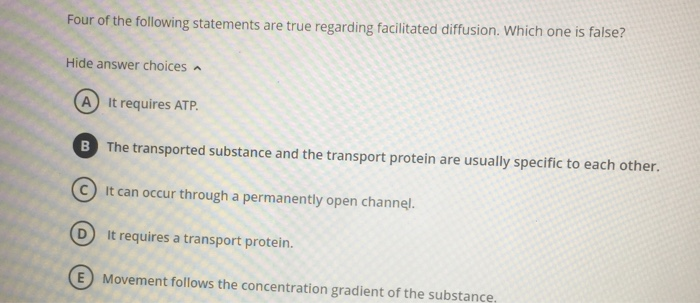
Solved Which Of The Following Is A Form Of Active Transport Chegg Com
Solved 15 Which Of The Following Is Not True For All Three Chegg Com
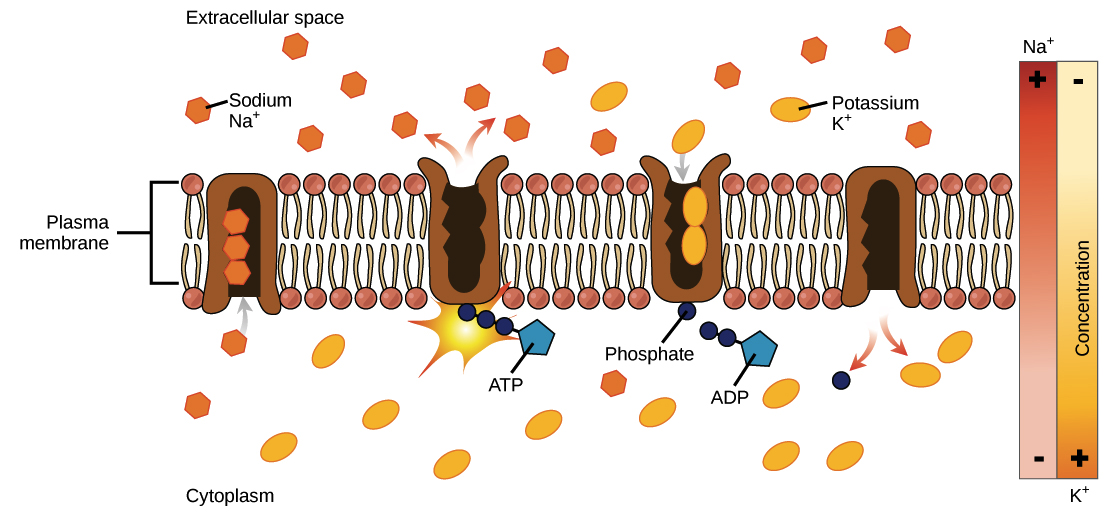
Active Transport Review Article Khan Academy
No comments for "Which of the Following Is Not True About Active Transport"
Post a Comment